
Three miles into a Saturday walk, my right heel started up with that old ache I know too well. I had been in a pair of Skechers Go Walk Joy for about five months, and my first thought was not a kind one. Then I did the math in my notebook and felt a little foolish. Those shoes had somewhere north of 400 miles on them. They were not failing me. They were finished, the same way every pair of walking shoes finishes, and I had stopped paying attention.
I am 56. I work part time at a hardware store in Dayton, Ohio, and I walk 4 to 5 miles most days. There is a loop through my neighborhood before my shift, a longer paved trail at the park on my days off, and six hours on sealed concrete in between. My feet are a women's 8.5 wide with arches on the flat side, and a rough stretch of heel pain a couple of years ago is what made me stop buying shoes by how they looked. So this is not a first-week impression. It is months of daily wear, and I will tell you the good parts and the parts that annoyed me.
The Quick Verdict
Light on the foot, easy to pull on, and comfortable for a long shift on concrete. A flat-pavement shoe with no water protection and no way to tighten it, so go in knowing that.
Amazon Check Today's Price →Five Months, 400 Miles, and I Bought the Same Pair Again
If your walking is pavement, sidewalks and a hard floor at work, this is the pair I keep coming back to. Check today's price and see if your size is in stock.
Amazon Check Today's Price on Amazon →How I've Used It
Most of my wearing has not been on a scenic trail. It has been on a sealed concrete floor at the hardware store, six hours at a stretch, half of it standing at the register and half walking the aisles putting things back where they belong. Concrete is the hardest surface I deal with, harder than sidewalk, because there is no give in it at all and you do it standing in one place. That is where a walking shoe either earns its spot by the door or gets left in the car.
The walking is a 2.5 mile loop through my neighborhood before work, mostly flat with a couple of long gentle grades, sidewalk the whole way. On days off I drive to the park and do 3 to 4 miles on a paved trail, usually with my husband Curtis, who walks faster than me and always has. My notebook says the first pair carried me about 420 miles before I retired them, which worked out to right around five months of real use.
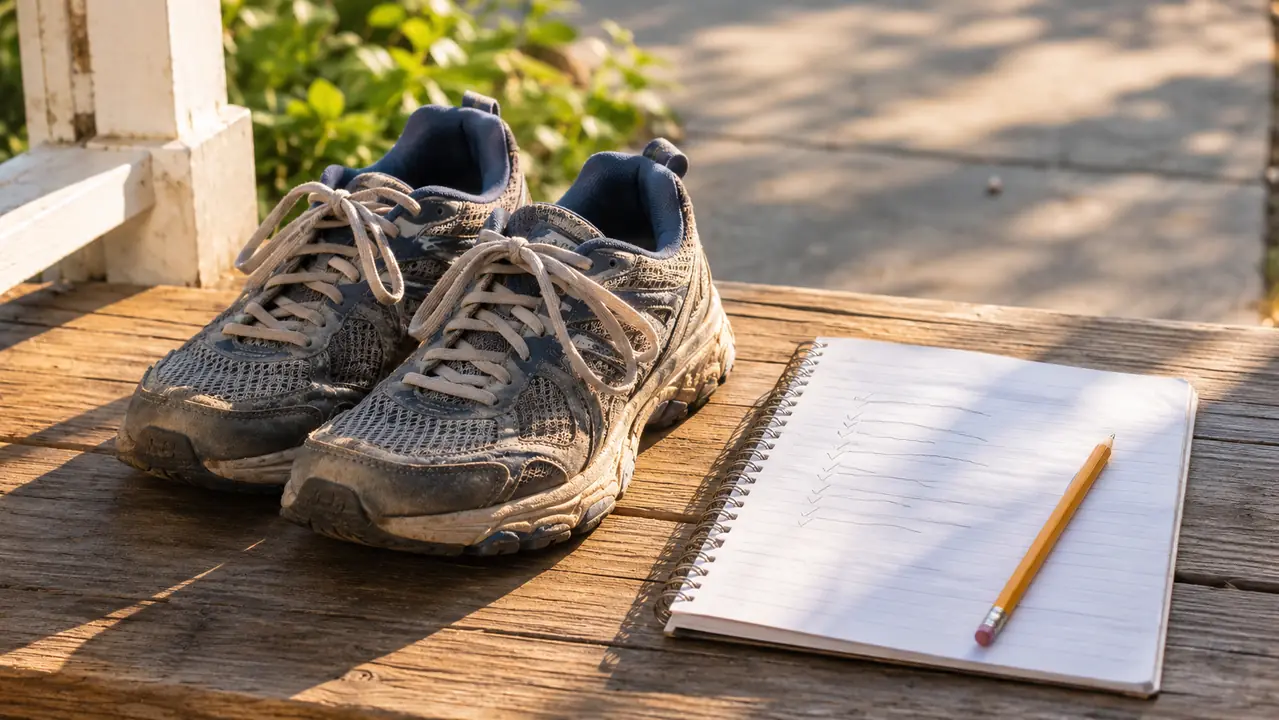
I started keeping that log after the heel pain stretch. It is nothing fancy, a spiral notebook with the date I start a pair, the date I stop, and the mileage I figure out from my loop. Every shoe feels fine at 50 miles. The log is the only way I know what a shoe is like at 300, when the cushioning starts to go and your body quietly starts covering for it without asking you first.
Before these, I spent a spring in a laced walking shoe that I liked in the store and resented by the second week. The tongue sat wrong and I stopped twice on the sidewalk to retie it. That sounds like a small thing until you are 56 and forty minutes into a walk. When I switched to the Skechers Go Walk Joy in early April, the first thing I noticed was silence. No creak, no flapping tongue, no lace end swinging at my ankle. I did my loop in the same time I always do and did not think about my feet once. That was the whole test, and it passed.
What the Go Walk Joy Gets Right
The listing says 5.2 ounces and I believe it. I have stood in my kitchen holding one in each hand next to my old walkers, and the difference is real, not a number on a box. What that buys you is a shoe you stop thinking about by the second block. There is no break-in stretch where your foot has to learn the shoe. I put them on the first morning and did my usual loop and nothing about my stride changed.
The upper is a knit that breathes. On an August afternoon in Ohio that matters more than any feature printed on the tag. Standing on concrete in a warm store, my feet did not get that swamped feeling I used to get in a leather walking shoe. They were warm, sure, it was 90 degrees out. But not stewing.
Here is a specific day so you know what I mean by a long shift. Second week of June, inventory day, and I was on my feet just under nine hours with a forty minute break in the middle. I counted afterward, because when people say a shoe is comfortable for a long day I always wonder whether they mean four hours or nine. My feet were tired that night. Tired is normal at my age after nine hours on concrete. They were not throbbing, and my soles were not the thing complaining. My lower back was, which is a separate department. The next morning I did my usual 2.5 miles before work and felt fine.
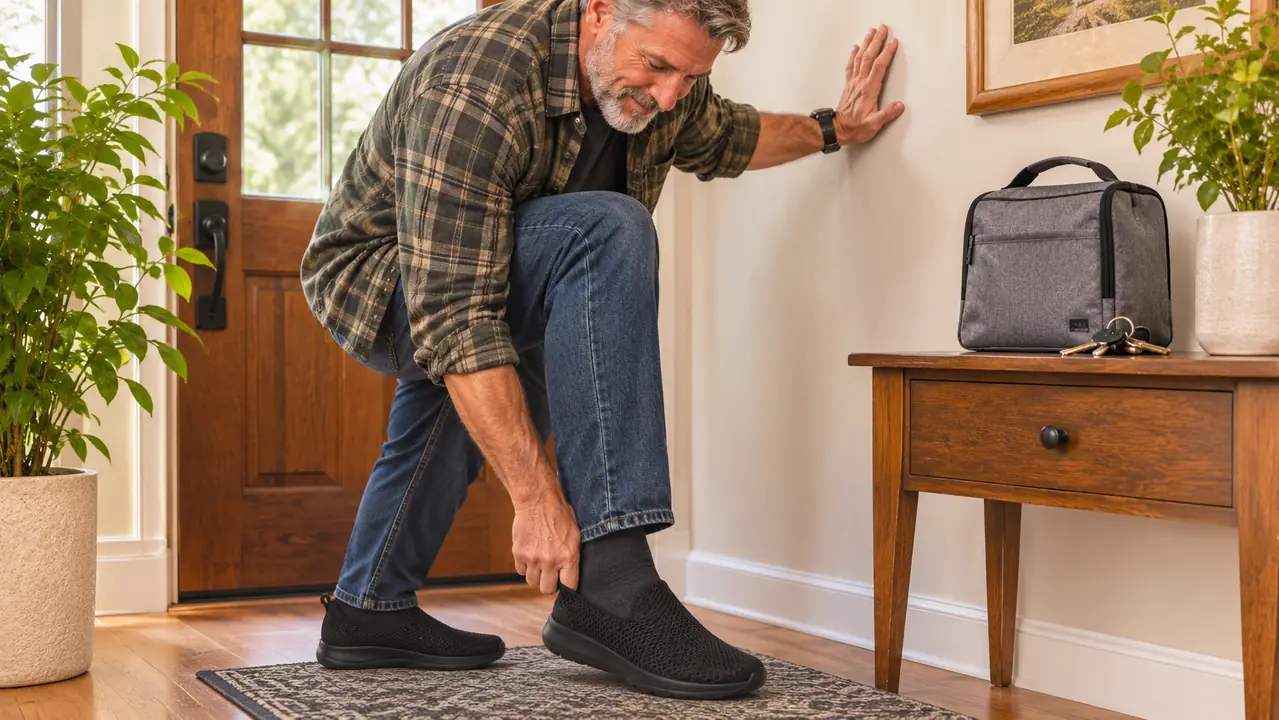
It is a slip-on with nothing to tie. I did not think I would care about that. I care now. At 5 in the morning with a coffee cup in one hand and a lunch bag in the other, I step in and go. At the end of a shift when my back is tired of bending, same thing. The tradeoff is that you cannot tighten them, which I get into below, but the convenience is real and I notice its absence every time I wear a laced shoe now.
The Air-Cooled Goga Mat Insole, Five Months In
The insole is the part people ask me about, so here is what I found. New, it is soft and springy and makes the shoe feel like more shoe than it is. The top surface has a light texture that keeps your foot from sliding forward when you are heading downhill. For the first couple of months I had no complaints at all, and I am someone who complains about shoes.
Every shoe feels fine at 50 miles. The log is the only way I know what a shoe is like at 300, when your body starts covering for it without asking.
By month four I could feel the difference under the ball of my foot. The foam had compressed right where I put my weight, which is exactly where you would expect it, and most of the spring was gone. That is not a defect, it is a soft insole doing what soft insoles do. I tried sliding one of my own inserts in on top and it made the fit too snug through the middle, so I pulled it back out and finished the pair as they came. If you need a firm insert, plan on buying a half size up or taking the factory insole out first.
One thing did help. Around month three I started rotating two pairs, wearing one while the other sat out a day so the foam had time to come back up between walks. I read that in a running magazine years ago and never bothered with it until my feet started talking. It stretched the useful life of the second pair by maybe three weeks. Not a rescue, but real. The other thing that helped cost nothing at all, which was sitting with my feet up for ten minutes after a shift instead of going straight into the kitchen and starting supper.
Fit Notes for a Wide Foot
I am a women's 8.5 wide and I bought my usual 8.5. The knit upper has some give, so a wide foot goes in without a fight, and the closed toe leaves enough room that my toes are not pressing the front. If you are between sizes, my advice is to stay with the size you wear in other athletic shoes rather than sizing up. A slip-on that is too long will slide at the heel, and with no laces there is nothing to save you.
The opening is generous. Nothing stiff sits at the back to dig into your heel, which is why I could wear a brand new pair for a full shift with no blister. That same softness is why I would not call this a stability shoe. With flat arches like mine, there is not much under the middle of the foot telling it where to be. On flat pavement that was fine. On the one morning I walked a cambered road for two miles, my arch noticed and said so.
Where It Falls Short
The listing is honest about this and so am I: not water resistant. Wet grass in the morning soaks straight through the knit. A puddle at the corner gets your sock wet in one step. I keep an older pair of something else by the door for rainy days, because wearing these in a downpour is a misery I only signed up for once.
The sole is soft, and soft rubber wears. Around 380 miles I noticed the tread under the outer edge of my right heel going smooth, and by 420 I could feel small stones through the forefoot on the park trail. The old heel ache also came back on the long walk that last week, and it went away two days into a fresh pair. That tells you more about mileage than about the shoe. If you are at 400 miles and something is starting to ache, look at the calendar before you look at your feet.
There is no lace and no strap, so there is no adjustment. If your feet swell on a hot afternoon, or you want things snug for a fast walk, you get whatever the pull-on gives you. And this is a pavement shoe. On the packed gravel stretch near the park entrance I felt every rock. If most of your miles are unpaved, this is the wrong tool and no amount of cushioning talk changes that.
One more small annoyance, since I promised to mention the parts that irritated me. The knit at the very front of the toe box picked up a grey scuff from a shopping cart wheel in May and it has not come out with a damp cloth. The uppers also hold a crease across the top where my foot bends. That one is purely cosmetic and does not change how they wear. I mention it because two coworkers have asked me whether the shoes are old, and they are not, they just look walked in. Which they are.
How It Compares to My Last Pair
The pair before these was a heavier laced walker with a firmer midsole. It lasted closer to 550 miles, and it held my arch better on a long day. It also weighed noticeably more, and I felt that in my shins on the back half of a walk. The Go Walk Joy trades some of that structure for weight and convenience. Whether that is a good trade depends entirely on where you walk and how long you stand still in one spot.
If my only walking were the park trail, I would go back to the firmer shoe and stop arguing about it. Since most of my miles are sidewalk and a concrete sales floor, I keep buying the Skechers. That is the whole comparison, really. Two different jobs, and I would not tell you one is better than the other without first asking what you are doing in them.
What I Liked
- 5.2 ounces, light enough that you stop noticing them
- Pull-on with nothing to tie, easy at 5 a.m. and after a long shift
- Breathable knit upper that does not cook your feet on a hot day
- Comfortable through a full six hour shift on concrete
- No break-in blisters, soft at the heel from day one
- Usually priced below most walking shoes, so check today's price
Where It Falls Short
- Not water resistant in any real sense
- No laces or strap, so the fit cannot be tightened
- Soft insole compresses noticeably by month four
- Tread starts going smooth around 400 miles
- Thin underfoot on gravel and unpaved trail
- Very little under the arch for a flat foot
Who This Is For
This is a shoe for the walker who does most of their miles on pavement, sidewalk and concrete. If you are on your feet for work, at a register or a warehouse floor or a hospital corridor, the low weight and the breathable upper are worth more than any technical feature on the tag. It suits a wide foot, a foot that swells by afternoon, and anyone tired of bending over to tie laces. It suits the person who wants one pair for the morning loop, the grocery store and the school pickup. And it suits anyone who replaces shoes on a mileage schedule instead of waiting for them to fall apart first. That is who Skechers built this one for, as far as I can tell, and it is a big group of us.
Who Should Skip It
Skip it if your walking is trails, gravel or wet grass, because you will feel every stone and the knit will not keep the weather out. Skip it if you need the shoe itself to support a flat arch rather than an insert doing that work. Skip it if you walk in the rain and do not want a second pair sitting by the door. And skip it if you want one pair to last two years. This is a light shoe with a soft sole, and it will be done somewhere around 400 to 450 miles, same as most of its kind. That is the deal, and it is a fair one as long as nobody pretends otherwise.
The Shoe I Keep Replacing With Itself
Light, breathable, and easy to pull on before a shift. If that matches how you walk, check today's price and the size chart before you order.
Amazon Check Today's Price on Amazon →