
Two years ago my heel started hurting on the walk from the parking lot into work, and that was the end of buying shoes because they looked nice. I have a women's size 8.5 wide foot with arches on the flat side, and I spend my shifts standing on concrete at a hardware store in Dayton. Since that heel let me know it was there, I have walked four to five miles most days, a loop around the neighborhood before my shift and a longer park trail on my days off. I keep a notebook with the miles on each pair and I retire them somewhere around 400 to 500 miles. So when one of the women at work asks me whether the Skechers Go Walk Joy is enough shoe or whether she ought to spend more on a New Balance, I have an answer that comes from my own feet instead of from a display rack.
Short answer: the Skechers Go Walk Joy is the easier shoe to live with, and a New Balance walking shoe is the sturdier one. The Skechers weighs 5.2 ounces, pulls on with no laces, and felt broken in on the first mile I walked in it. A New Balance walking shoe comes in more widths, holds its shape longer, and does more for a foot that wants to be held rather than cradled. If your feet are mostly fine and you want light and simple, get the Skechers. If you have a wide foot, a full shift on a hard floor, or a foot that has started to complain, the New Balance is worth the extra. Neither one treats anything. They make walking more comfortable, and that is the whole of what they do.
| Skechers Go Walk Joy | New Balance walking shoe | |
|---|---|---|
| Weight | 5.2 ounces, barely there once it is on | Noticeably heavier when you pick it up |
| Getting them on | Pull-on, no laces, no bending over | Lace-up, needs two hands and a minute |
| Break-in | Comfortable on the first mile, nothing to soften up | Took me a week or two before it stopped feeling stiff |
| Width options | One fit per size, roomy on my wide foot | Sold in several widths, wide and extra wide among them |
| Underfoot feel | Soft and springy from the first step | Firmer, more structured under the arch |
| A full shift on concrete | Fine for a few hours, I feel it by the end | Holds up better through eight hours on my feet |
| Wet ground | Not water resistant, damp grass comes straight through | More shoe between you and the pavement on a damp day |
| Holding its shape | The heel went soft on me before 400 miles | Still had structure past the point the Skechers gave out |
| Everyday look | Reads like a plain sneaker, fine with jeans | Sportier, more obviously an athletic shoe |
| Best for | Everyday walkers with feet that are not fussy | Wide feet and long days on hard floors |
Where Skechers Go Walk Joy Wins
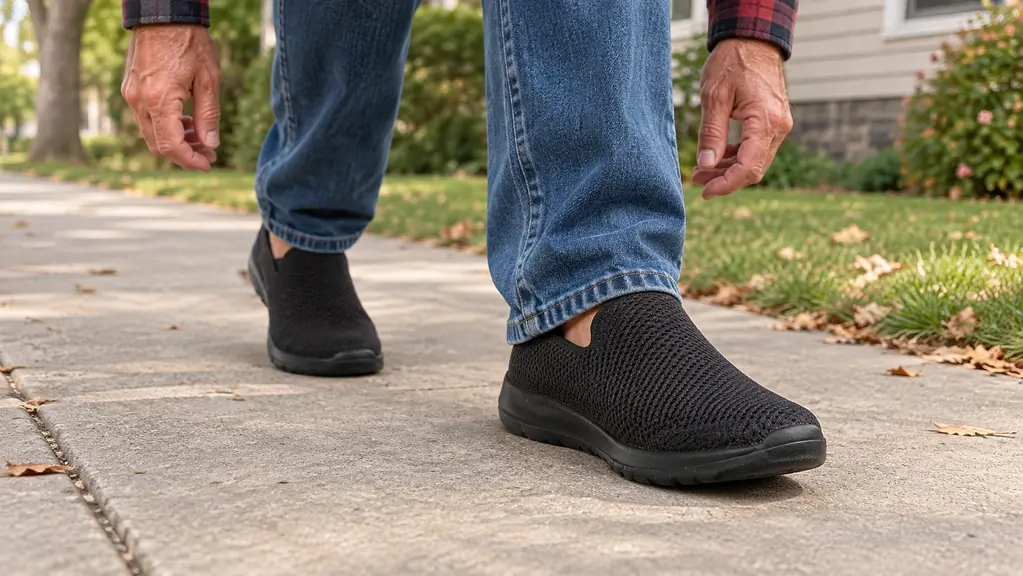
The weight is the first thing I noticed and it is the thing I still notice. At 5.2 ounces the Go Walk Joy is the lightest pair in my closet, and light stops mattering right up until about mile two, when your legs are doing the work and you would rather your feet just came along. That is where I feel the difference. On my four mile loop before a shift, I am not thinking about my feet at all, and a shoe that keeps me from thinking about my feet has done its job. The Air-Cooled Goga Mat insole is soft from the very first step without that sinking feeling some cushioned shoes get after an hour.
The second thing is that there is nothing to tie. The Go Walk Joy is a pull-on, so on a morning when I am already running late I step into them and I am out the door. No bending over, no double knot, no lace coming undone at the crosswalk. I am not exaggerating about how fast it is, either. The first week I had them I counted, mostly to prove a point to Curtis, and from standing at the door to walking down the steps was under three seconds, against most of a minute in a lace-up pair I was wearing at the same time. That sounds like a small thing until it is 5:40 in the morning in February and you are trying to get out the door before your coffee goes cold. The upper is breathable, which I appreciated more in July than in April, and the whole shoe went on and stayed comfortable with no break-in period at all. My first walk in them was four miles and I did not come home with a hot spot or a rub. That is not nothing when you have bought shoes that needed two weeks of short walks before they stopped fighting you.
Where New Balance Wins
Now the other side, because a comparison with only one winner is not a comparison. A New Balance walking shoe comes in more widths than the Skechers does, and for a woman with an 8.5 wide foot that matters. I got lucky with the Skechers, they ran roomy enough that I did not have to size up, but lucky is not a fit system. New Balance sells several widths including wide and extra wide, so if your foot has never been happy in a standard width, you have a real option there instead of a hope. The upper on the New Balance also holds my foot more firmly, which I want on a longer walk when my foot starts to move around inside the shoe.
The bigger difference shows up late in a shift. Standing on the concrete at the store, the Skechers is lovely for the first few hours and then I start to feel the floor through it. The New Balance pair has more structure underfoot and I notice the difference around hour six, when I am still standing and not shifting from foot to foot. They also last longer. My Skechers went soft in the heel well before I hit 400 miles, earlier than any pair in my notebook should, and the New Balance pair was still holding its shape at the same mileage. One Saturday in June I walked the park trail end to end, six and a quarter miles, the longest single walk I have done in either pair. The Skechers was fine for the first four miles and then I started to feel the ball of my foot, and by the time I reached the car I wanted them off in the parking lot. I did the same trail the following Saturday in the New Balance pair and finished without thinking about my feet once. That is one walk, not a study, but it lined up with everything else I had noticed. Add a little more between you and wet pavement and that is the case for the other shoe.
My Skechers went soft in the heel before 400 miles. The New Balance pair still had shape to it at the same mileage. That is the whole comparison in one number from my notebook.
If your feet mostly behave and you want light and simple, this is the pair
5.2 ounces, pulls on with no laces, comfortable on the first mile. It is the shoe I reach for on a quick loop before work.
Amazon Check Today's Price on Amazon →The Fit Question, Since That Is What You Asked
Most of the questions I get at work are not about cushioning, they are about size. Here is what I found, including the mistake I made first. I ordered a half size up, on the theory that a roomy shoe beats a snug one, and walked two miles around the block to test it. By the time I got home my heel was lifting with every step and I could feel my foot sliding forward into the toe, which is exactly the wrong thing for a foot that has given you heel trouble before. I sent that pair back and ordered my usual 8.5 wide. The Skechers Go Walk Joy ran roomy for me at my normal size, and because it is a pull-on with no laces to cinch, there is no way to tighten it up if you guess wrong. With a lace-up shoe you can snug the middle and let the toe stay loose. With this one, the fit you buy is the fit you get. My advice is to order your usual size and be honest with yourself about whether your foot slides forward when you walk. If it does, the laceless design works against you.
Try them at the end of the day, not first thing in the morning, because feet swell and the shoe that felt fine at 7 a.m. can feel tight at 5 p.m. Wear the socks you actually walk in. And if you are between sizes, remember that a roomy pull-on will feel looser after a month, while a lace-up can be adjusted back. That is not a knock on the Skechers, it is just the trade you make for never tying a lace again. If you have a bunion or a hammer toe, go try shoes on in person, because neither of these is going to reshape itself around you.
What I Liked
- 5.2 ounces, the lightest walking shoe I have owned
- Pull-on, so there is nothing to tie at 5:40 in the morning
- Air-Cooled Goga Mat insole is soft from the first mile, no break-in
- Breathable upper that stayed comfortable on warm walks
- Roomy enough on my wide foot that I did not size up
Where It Falls Short
- Not water resistant, damp grass comes right through
- The heel went soft on me before 400 miles
- I feel the concrete by the end of a full shift
- Fewer width options than New Balance
- No laces means no way to snug up a loose fit
How I Tested Both
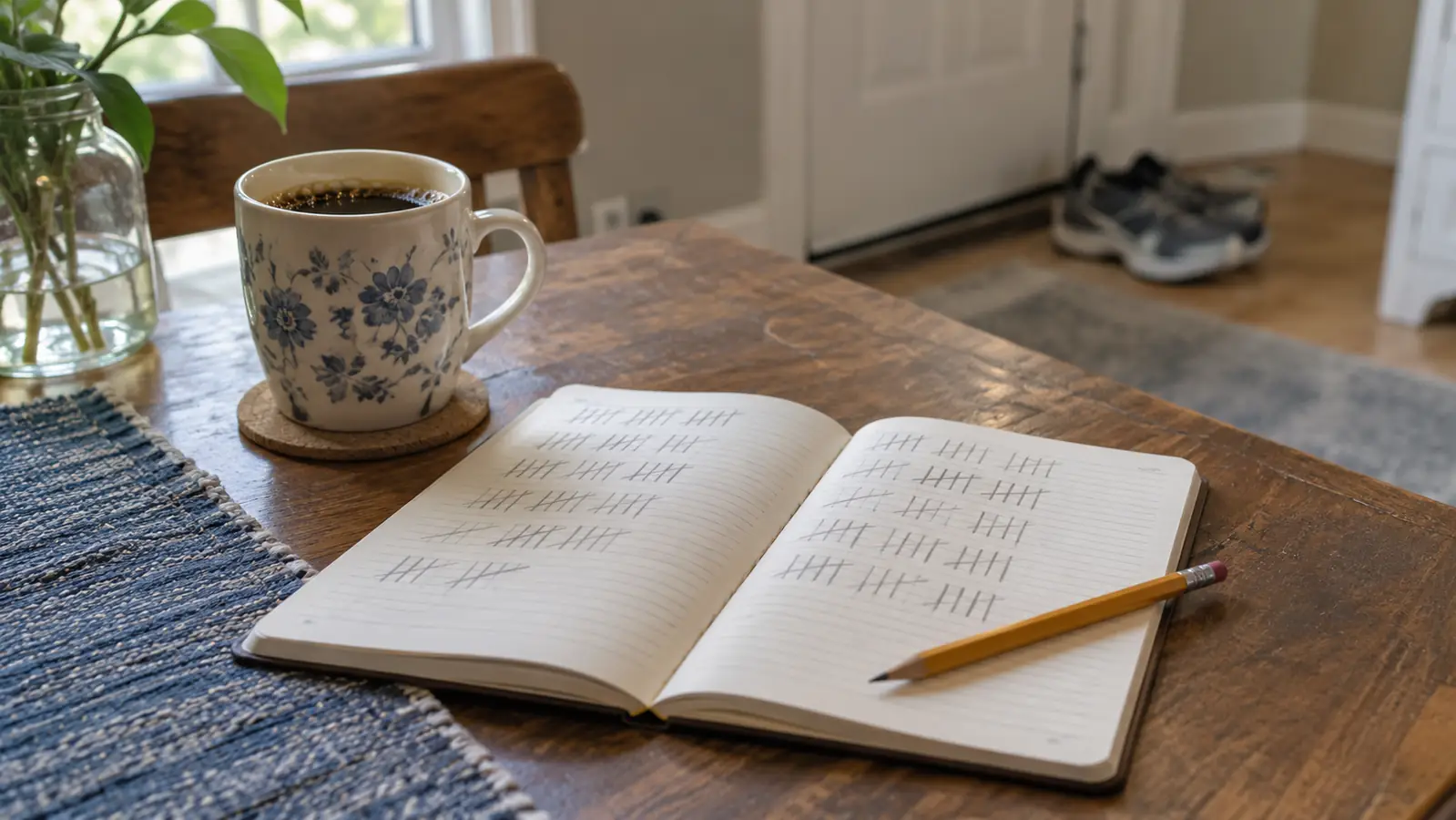
I walked in both pairs on the same routes: the neighborhood loop, which is a little over three and a half miles with two long hills, and the park trail on my days off, which is flatter and longer. The Skechers came in mid April and the New Balance pair in late May, a month apart, and both were still in the rotation at the end of summer. I wore the Skechers on work days too, on my feet at the register and in the aisles for a full shift. Every pair in my closet gets written down in a spiral notebook with the date I started and the date I retired it, and the page says the Skechers went 386 miles before I moved them to yard work. The New Balance pair passed 400 still doing morning loops. Nothing here is a feeling I had in a parking lot. Curtis walks the weekend trail with me and he will tell you I have opinions about shoes the way other people have opinions about football.
A word on what a shoe can and cannot do. A walking shoe makes the miles more comfortable. It does not fix plantar fasciitis, it does not cure a heel spur, and it will not straighten out a flat arch. My heel pain got better because I changed shoes, stretched in the morning before my feet hit the floor, and gave it time. If your pain is sharp, or it is still there after a few weeks of sensible shoes, see a podiatrist. I am a woman who walks a lot and works on her feet, not a doctor, and nobody should take shoe advice from the aisle of a hardware store.
Who Should Buy Which
Buy the Skechers Go Walk Joy if your feet are reasonably well behaved and you want the lightest, simplest thing you can put on. It suits the walker who does three or four miles a day, who hates laces, who wants a shoe by the door that goes on in two seconds, and who is not standing on a hard floor for eight hours. It also suits anyone who has been putting off new shoes because shopping is a chore. There is very little to get wrong here, and the first walk is as good as the twentieth, which is more than I can say for most pairs I have owned.
Buy a New Balance walking shoe instead if you have a wide foot that needs a real width, not a roomy standard, or if your day is a long one on concrete. It is also the better choice if you are hard on shoes and want something that keeps its shape past a few hundred miles, or if you walk where the pavement stays damp. Both are honest everyday shoes. The difference is whether you are buying light and easy or structure and longevity, and only you know which of those your feet have been asking for.
Either way, write the date on the box when you start wearing a pair and replace them around 400 to 500 miles, or sooner if the heel goes soft and your feet start to ache at the end of a walk. Shoes wear out quietly. The upper still looks fine while the cushioning underneath has already quit.
The pair I keep by the door for the morning loop
Light, laceless, and comfortable from the first mile, with a size range worth checking against your own foot. See today's price and sizing on Amazon.
Amazon Check Today's Price on Amazon →