
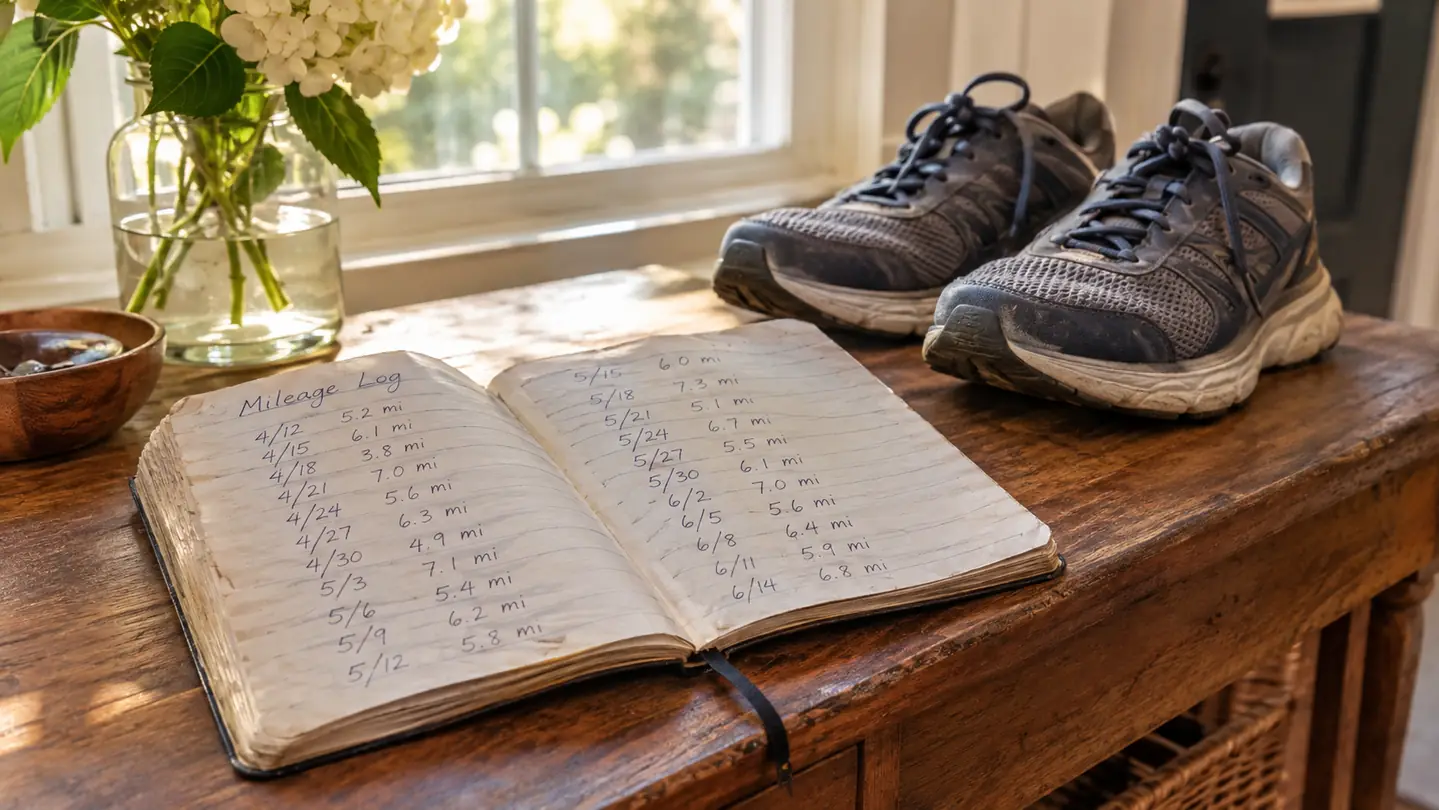
I keep a small notebook in the drawer by the front door. Every pair of shoes I walk in gets a start date, a rough mileage count, and a line or two about how my feet felt that week. I started it two years ago, after a stretch of heel pain that turned the first mile of my morning loop into something I dreaded. I am 56, I work part time at a hardware store in Dayton, Ohio, and I stand on concrete most of my shift. I walk four to five miles on a normal day. My feet are women's 8.5 wide with arches on the flat side, and I have learned the hard way that comfort almost never comes from one big purchase.
What helps is small and repeatable. For me one of those small things has been a Copper Compression arch support sleeve. It is a soft band that wraps the middle of your foot, and I started wearing a pair in my work shoes before I really understood why it was helping. This is not a cure for anything and I am not going to pretend it is. It is a comfort tool, the same way a decent sock or a shoe that actually fits is a comfort tool. Below are ten reasons it has earned a place in my rotation, plus the places where I think it falls short.
The soft band that fits inside the shoes already in your closet
If your arches ache by the end of a shift and you are not ready to replace every pair of shoes you own, start here. One pair, one size, and it slides on under a sock.
Amazon Check Today's Price on Amazon →It slips into the shoes you already own
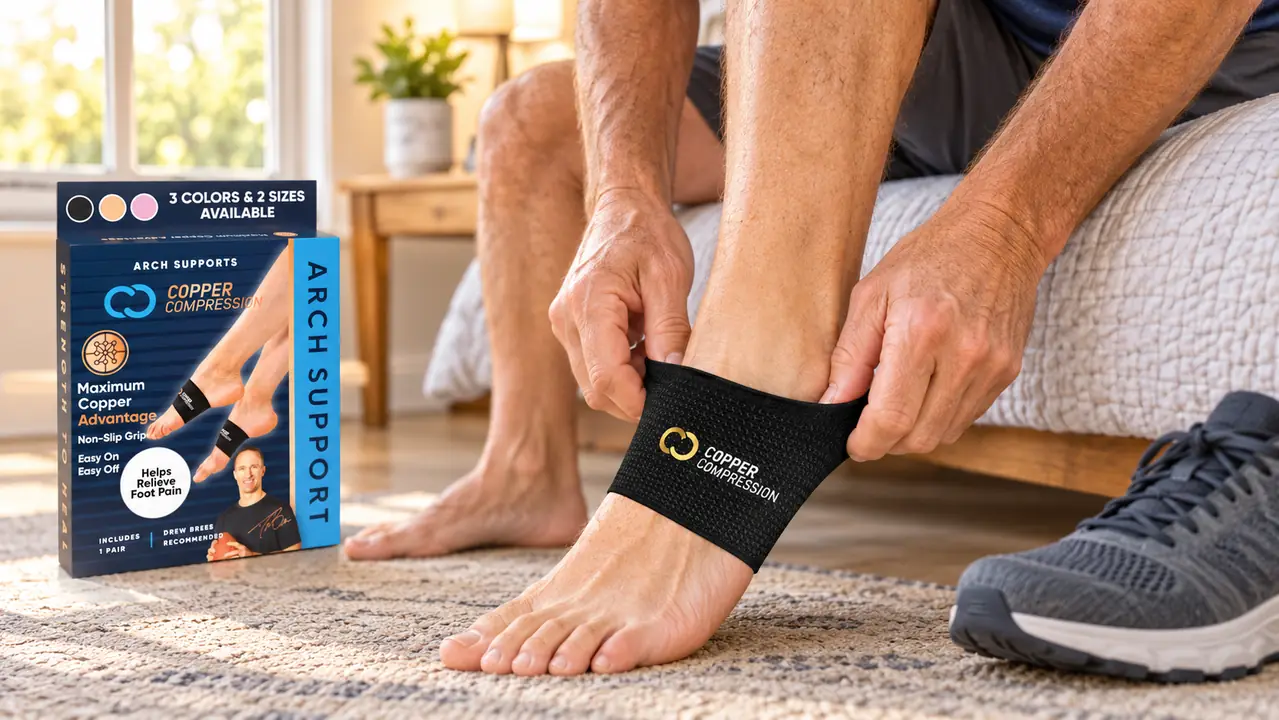
This is the part that sold me. The Copper Compression sleeve goes into sneakers, work shoes, boots and sandals. I did not have to buy a new pair of anything. My work shoes are broken in exactly the way I like them and I did not want to start over with something stiff. I put the sleeve on, put my shoe on over it, and went to work. That was the whole test. If a foot product makes you rebuild your shoe rotation first, it tends to end up in a drawer by March.
It is a sleeve, not an insole, so nothing shuffles under your foot
I have tried insoles. Some of them were fine. The problem for me was always the shuffle. Trim too much and they slide forward. Trim too little and they bunch at the toe. A sleeve does not work that way. It hugs your foot instead of sitting under it, so when you pull your shoe off, the support comes off with your foot. I stopped thinking about it by the second week, which is the highest compliment I can pay a piece of foot gear.
The compression wraps your whole midfoot instead of poking one spot
An insole with a raised arch pushes along a single line. That can be exactly right, and it can also feel like standing on a marble. The Copper Compression sleeve spreads gentle compression around the middle of the foot instead. I noticed it most on the days I had been on concrete for six hours. It felt less like a shove under my arch and more like a hand cupping the side of my foot.
You can wear it under or over a sock
Small thing, big difference in daily use. Over a thin sock in my work shoes. Under a thicker walking sock on cold mornings. Against the skin in sandals, because a sock in a sandal is not a look I am willing to defend in public. Being able to change how you wear it means you are not locked into one shoe and one season, which matters in Ohio.
It is slim enough that your shoe fit barely changes
The band is about half an inch thick and weighs a little over an ounce, so it does not eat room in the shoe the way a full insole can. I have a wide foot and I am fussy about toe room. Nothing about my work shoes felt tighter. One honest caveat: if you are already squeezing into a shoe that is half a size too small, no sleeve on earth will fix that. Fix the shoe first.
By the last half mile home, the hot ache along the bottom of my foot had gone quiet. That is the entire claim I am making.
One size covers high arches and low arches alike
The sleeve comes as one pair in one size, and the listing says it suits both high and low arches. Mine are on the flat side. I handed the second sleeve to my husband Curtis on a Saturday walk to see how it felt on a foot that is not mine, and he did not hand it back, which is his version of a rave review. If your feet are extremely wide or extremely narrow, expect some guesswork. Otherwise one size is one less decision to make before breakfast.
You know within one walk whether it is helping
Some foot purchases take weeks to judge. This one does not. Put it on, do your loop, and pay attention on the last half mile. For me the difference showed up as less of that hot ache along the bottom of the foot by the time I got home. If you feel nothing at all after three or four walks, that is useful information too. It probably means your issue is somewhere else and deserves a different conversation.
It is a simple way to find out if arch support is even your problem
Before anyone talks you into expensive custom work, it helps to know whether support is the lever at all. A sleeve is a low stakes test. Wear it for a couple of weeks in the shoes you walk in most. If your feet feel better, you have learned something worth knowing. If they do not, you have saved yourself a long detour and you can sit down with a podiatrist and give a clearer account of what you already tried.
It earns its place on long days on concrete
The listing mentions nurses, teachers and people who stand at work, and I would add hardware store staff to that list. My shift is a lot of standing with bursts of walking, and that combination is what used to wreck me by three in the afternoon. The sleeve does not make a twelve hour day feel like a nap. It does take enough of the edge off that I am not counting the minutes until I can sit down.
It packs flat and disappears into a bag
At six by four inches and just over an ounce, a pair takes up less room than a pair of socks. Mine lives in the zippered pocket of my walking bag, so it comes along on park trail days too. I have rinsed it in the sink with a little soap and let it air dry overnight. Check the care instructions on the listing before you do that, because the material is a polyester blend and I would not put it anywhere near a hot dryer.
None of that adds up to a fix for a real foot problem. It is a comfort layer, and comfort layers have limits. Which is why the next part matters more than any of the ten above.
What I'd Skip
Skip it if you are expecting a cure. It is not one, and no sleeve is. Skip it if your podiatrist has told you that you need a rigid prescription orthotic, because a soft band is not that and should not stand in for it. Skip it if your shoes are worn out. I retire walking shoes somewhere between 400 and 500 miles, and a sleeve inside a dead shoe is just a bandage on a bad decision. Skip it if you have circulation problems or numbness in your feet and have not asked a doctor about compression first. And if your heel pain is sharp, one sided, or getting worse instead of better, book the podiatrist appointment. Two years ago I put that off for months and I regret it. A Copper Compression sleeve helped me stay comfortable while I sorted my shoes out. It did not diagnose anything, and it will not do that for you either.
One pair, one size, and a test you can run this week
If the ten reasons above sound like your week, the honest next step is a single pair and a few walks in the shoes you already own. That is exactly how I started.
Amazon Check Today's Price on Amazon →