
I bought my first pack of CHARMKING compression socks in a hurry, the night before a twelve-hour shift on the concrete floor at the hardware store, because my calves had been aching by two in the afternoon for about three weeks straight. I am fifty-six. I walk four to five miles most days, a neighborhood loop before work and a longer park trail on my days off. I had a bout of heel pain a couple of years back that finally got me serious about what goes on my feet, and my arches are a touch flat, and I wear an 8.5 wide. So when I say I notice a sock, I mean it.
What I did not expect was that fifteen months later I would still be rotating the same three pairs, washing them every week, and that they would be the least expensive piece of foot care in my drawer per mile walked. That is not the report I usually get to give. So here is the whole thing, the good and the nuisance, for the walkers and the standers who are wondering whether the CHARMKING socks are worth the drawer space.
The Quick Verdict
Fifteen months of daily walking and concrete floors and the CHARMKING socks are still doing the job they were bought for: my calves stop complaining by mid-afternoon. The fit runs snug at first, the toe seam is not invisible, and one of my three pairs has started to relax at the cuff. I would still buy them again tomorrow.
Amazon Check Today's Price →Three pairs, 15-20 mmHg, and a calf that stops aching by 2pm
If your afternoon involves a swollen ankle or a calf that feels heavy by the end of a shift, this is the simplest place to start. Three pairs, machine washable, and they have lasted me fifteen months of daily wear.
Amazon Check Today's Price on Amazon →How I've Used It
Not in a lab. On the sidewalk on Delphos Avenue before my shift, on the paved loop at the park on Tuesdays and Saturdays with my husband Curtis, and standing on a concrete sales floor for six to eight hours at a stretch. That is the whole test protocol. I wore the CHARMKING socks four to five days a week, sometimes more in the summer.
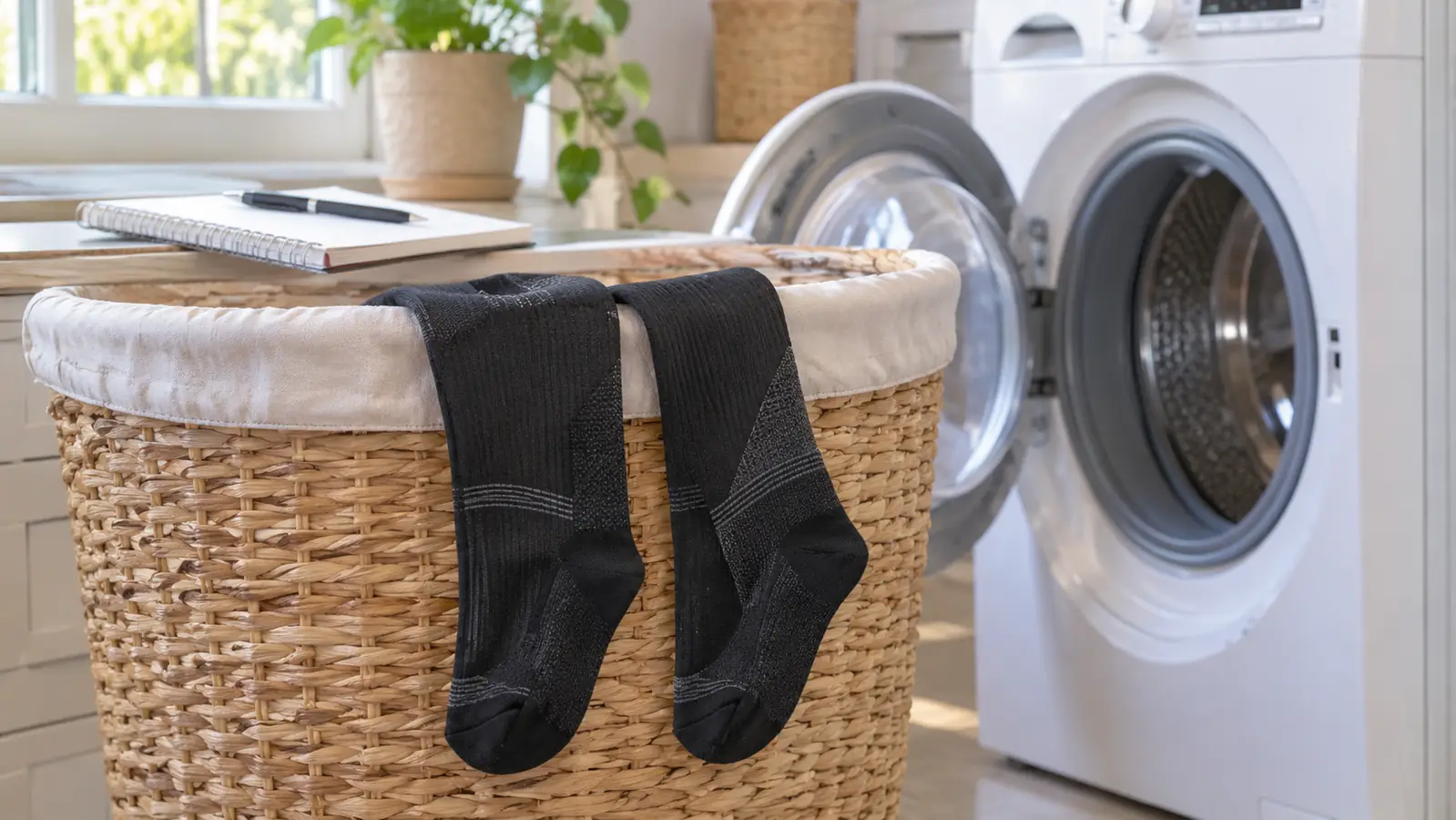
I rotate the three pairs that come in the pack. One goes in the wash, one is drying, one is on my feet. I wash them machine, cold, and I let them air dry on the rim of the laundry basket rather than putting them in the dryer, because the label says machine wash and heat is the enemy of spandex. That is the only care instruction I follow religiously and I think it is why they have lasted.
The CHARMKING socks are a pull-on fit, Large-X-Large in my case, and the fabric is 85 percent nylon and 15 percent spandex. Fifteen to 20 mmHg of graduated compression, which is the mild end of the medical range, the zone where you feel it but you are not wrestling them on like a wet suit. I want to be clear about what that means: they help with comfort and swelling at the end of a long day. They do not treat anything. If your heel pain or your swelling is persistent, that is a podiatrist conversation, not a sock conversation.
The First Two Weeks Are the Honest Test
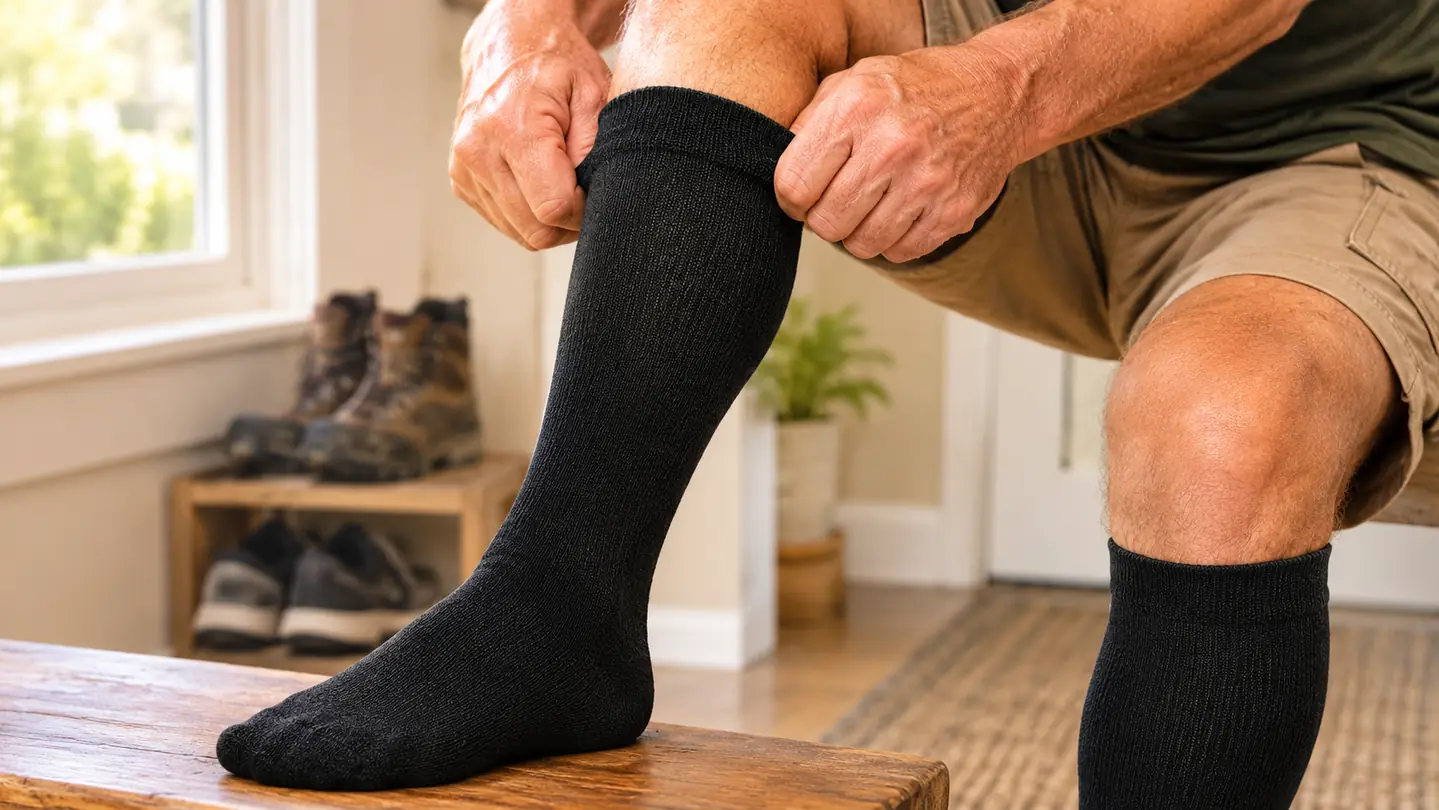
The first time I pulled them on I thought I had made a mistake. They are snug. Snug around the arch, snug around the ankle, and getting the cuff up over the widest part of my calf took both hands and a small amount of cursing. If you have ever put on a new pair of support hose, you know the feeling. If you have not, imagine a sock that has opinions.
It loosened up after three or four washes. Not a lot, but enough. The spandex relaxes into the shape of your leg and the cuff stops fighting you. By week two I could get them on sitting on the edge of the bed in under a minute, and by week three I stopped thinking about them at all, which is the highest compliment I can give a piece of clothing.
The one thing that did not soften: the toe seam. It is not painful, but on a long walk I can feel it, and I have one toenail that is a little sensitive from an old running habit. On the really long park days I turn the sock slightly so the seam sits off the nail. That is a two-second adjustment, not a dealbreaker, but I would be lying if I said the sock feels like nothing.
By the end of the first month, the 4pm ache in my calves had moved to about 6pm, and by the end of the second month I mostly forgot it was there at all. That is not a cure. That is a sock doing its job.
What Changed Over Fifteen Months
Three pairs, four to five days a week, fifteen months. That is a lot of wash cycles per pair if you divide it out, more than most people will ever put a sock through. Here is the honest accounting on the CHARMKING set.
Two of the three pairs still hold their compression well. I can feel the graduated squeeze at the ankle and it still tapers up the calf the way it did in month one. No runs, no holes, no thin spots at the heel. The nylon and spandex blend has held up to the washing machine better than I expected, and I credit the air drying for most of that.
The third pair, the one I have worn the most, has relaxed at the cuff. It still compresses the calf and the ankle, but the top band no longer grips the way it used to and it slides down about an inch over a long walk. Not enough to fall off. Enough that I noticed, and enough that I have started saving that pair for short days and wearing the two good ones on the long ones.
That is the tradeoff with a three-pair pack at this compression level. You are going to wear one pair more than the others because it fits the best or it is the one that is clean on a Tuesday, and that pair will wear out first. Fifteen months is a good run for a sock you replace about once a year, and I am not going to pretend otherwise. I will replace the set this spring, and I will buy the same ones.
The Concrete Floor Test
This is where the CHARMKING socks earned their place in my drawer. Standing on a concrete sales floor is a specific kind of tired that walking does not quite prepare you for. It is not the miles, it is the stillness, the eight hours of weight coming down through the same two spots on your heels.
Before the socks, my ankles would be visibly puffy by the time I clocked out, and my shoes would feel tight in a way they did not at 8am. That stopped. Not overnight, and not entirely, but within about a month the end-of-shift puffiness had gone from noticeable to barely worth mentioning. My work shoes fit the same at 4pm as they did at 9am, and that alone is worth the drawer space.
I want to be careful here, because I have read a lot of sock reviews that sound like a medical device commercial. The socks help with the way my legs feel after a long day on my feet. They do not fix a vein problem, they do not cure anything, and if you have persistent swelling or pain you should be talking to a doctor rather than buying socks off the internet. Mine is a comfort story, not a treatment story.
Fit Notes for Wide Feet and Thick Calves
I wear an 8.5 wide with a slightly flat arch, and the Large-X-Large fit me with room to spare. The listing gives the size as Large-X-Large, and the fit is a pull-on with no closure, so what you are really buying is the stretch of the fabric. At 85 percent nylon and 15 percent spandex there is a fair amount of give, but the compression is what sets the limit, not the width.
The place it gets tight is the widest part of the calf, right below the knee. If your calves run thick, give yourself a minute to work the cuff up rather than yanking. If you are between sizes, I would go up rather than down, because a sock that is too tight at 15-20 mmHg is a sock you will stop wearing by the second week, and that is money sitting in the drawer doing nothing.
Height-wise they came up to just below my knee, which is what I wanted for walking. If you are taller than about five foot eight, check the listed dimensions rather than assuming, because a sock that stops mid-calf is a different animal than one that reaches the knee. The pack itself lists at 9 by 6.2 by 1.9 inches and 6.4 ounces, which tells you how compactly they fold down, not how they fit. That is a listing detail, not a sizing guide.
Where They Fall Short
The toe seam, which I already mentioned. It is the one thing about the sock I actively manage rather than ignore.
The cuff relaxation on the most-worn pair is the second. Fifteen months is a fair life, but I would rather buy a two-pack of one style I like than a three-pack where the third pair is the one I reach for less often and therefore outlasts the others and no longer matches the set.
The third is laundry math. Compression socks need to be washed between wears, and you only have three pairs, so you are doing sock laundry more often than you do regular sock laundry. In the summer, when I walk every day, I am washing them every three or four days. If you want to skip that, buy two packs.
The fourth is a small thing but it matters to me: they are not a shoe. On the longest park days, the CHARMKING socks help the calf and the ankle but they do not fix a worn-out midsole. I still replace my walking shoes around the 400 to 500 mile mark, and I still log it in a notebook like a woman who has been burned before. The socks are one layer of the fix, not the whole fix.
What I Liked
- Fifteen months of regular washing and two of three pairs still hold their compression
- Graduated 15-20 mmHg squeeze is firm enough to feel and gentle enough to wear all day
- Noticeably less end-of-shift ankle puffiness on concrete floors within the first month
- Three pairs per pack means one is always clean, even with daily walking
- Machine washable and air dries fast, so no special handling
- Cheap enough per mile walked that replacing the set once a year is not painful
Where It Falls Short
- The toe seam is noticeable on long walks
- The most-worn pair relaxed at the cuff by about month thirteen and now slides down an inch
- Three pairs means frequent sock laundry if you walk every day
- Snug enough in the first two weeks that some people will give up before they break in
- Not a substitute for replacing worn-out walking shoes or seeing a podiatrist
Who This Is For
If you walk four or five miles a day, or you stand on a hard floor for a living, or both, and your legs feel heavy and puffy by the end of the afternoon, the CHARMKING socks are a sensible place to spend a little money. They are also a good first compression sock if you have never worn one, because 15-20 mmHg is the mild end of the range and it will not scare you off the whole idea.
They suit people who want to put the sock on in the morning and forget about it. They suit people who are not going to hand wash anything. They suit people who understand that a sock is a comfort tool and not a medical device, and who will go see a podiatrist when something is actually wrong.
Who Should Skip It
If your doctor has told you that you need a higher compression level, do not substitute these. Fifteen to 20 mmHg is mild, and a prescription is a prescription.
If you have circulation problems or a diagnosed condition and you have not asked your doctor about compression socks, ask first. That is not me being cautious on the internet. That is me being a woman of a certain age who has learned that the easy fix is not always the right fix.
Skip them too if you hate anything snug on your calves. These are not a gentle hug. The first week is a fight, and if the idea of that makes you itch, you will not last the break-in period. And if your problem is your shoes rather than your legs, no sock is going to fix that. Replace the shoes.
Fifteen months in and I am buying the same three pairs again this spring
I logged the miles, I never once put them in the dryer, and two of three pairs are still holding their compression. The short version: they work, the toe seam is the worst thing about them, and I am replacing them with the same set.
Amazon See the current price on Amazon →One last thing, and then I will get off my soapbox. A sock is a small thing. But my feet carry me four or five miles a day and then stand me on concrete for eight hours, and small things done consistently are most of what makes that possible. The CHARMKING socks are one of those small things for me. They are not perfect, they are not magic, and they will not fix a foot that needs a doctor. But they bought me a year of afternoons that do not ache, and I will take that deal every time.